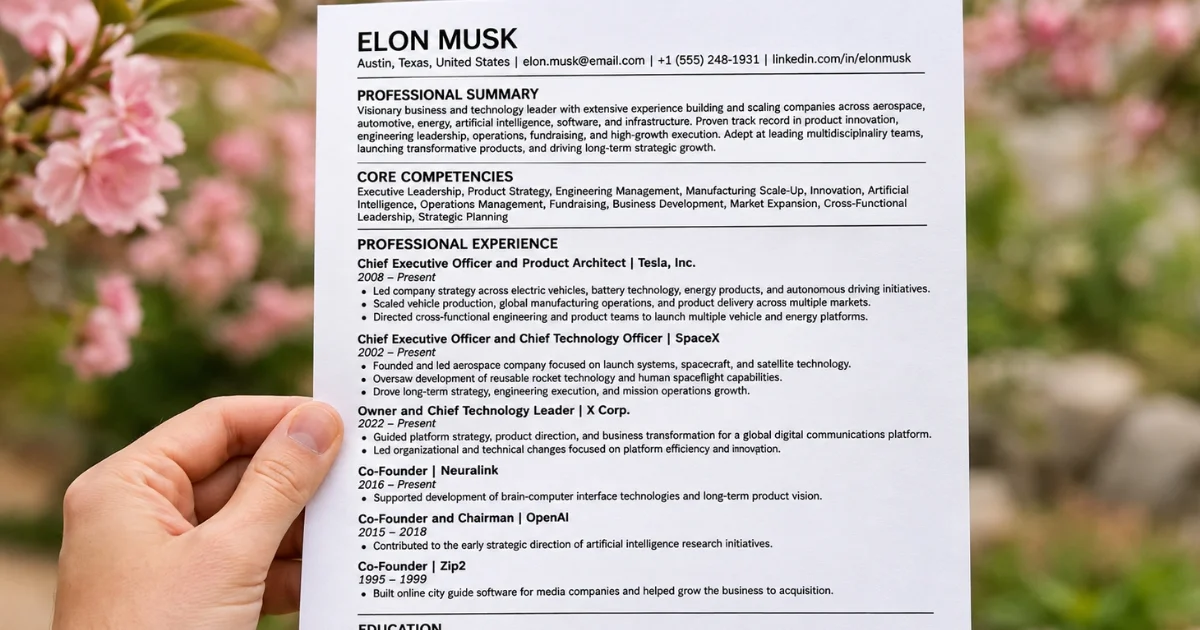
Your CV matters a lot because when employers see it, they immediately know if they are hiring you, or not.
A good CV helps someone understand, quickly, what role you want, what you have done that is relevant and why it is worth a conversation. If your CV forces them to guess, they will move on to the next candidate.
Forget about the fancy templates people sold to you. This article is about making your value very obvious to future employers.
Start with the role
Before you edit or create a CV, decide which role you are applying for.
A CV for a social media manager should not lead with unrelated jobs.
A CV for a customer support role should make communication, tools and problem-solving visible. The experience can still be real, but the order and language should make sense for the role in front of you.
Use the job description as a map. Look for repeated responsibilities, tools and outcomes. Then show the truthful parts of your experience that match them.
Let the first third do the heavy lifting
Most readers start at the top and scan.
Your name and contact details should be clean. Under that, use a short summary that answers:
- What kind of work do you do?
- What level are you operating at?
- What evidence makes you relevant?
Then put your strongest relevant experience, skills or project work next. Do not make someone wait until page two to find the reason to call you.
Replace responsibilities with evidence
A responsibility says what you were asked to do. Evidence says what you did with it.
Weak: “Responsible for customer enquiries.”
Better: “Handled customer enquiries across WhatsApp and email, resolving common issues and keeping response times organised.”
Weak: “Managed social media.”
Better: “Planned weekly social content, wrote captions and used performance data to improve the next month’s posts.”
When you have a real number, use it. When you do not, be precise about the scope, process or result. Never invent a number because it sounds impressive.
Make it easy to scan
Recruiters read in patterns. Help them.
Use clear job titles, company names and dates. Keep bullet points short. Start bullets with active verbs. Use enough white space to make the page readable. Do not shrink the font just to force every detail onto one page.
A one-page CV is not always better. A two-page CV is not always too long. The test is simple: does every line earn its place?
Keep one clear version of your story
Your CV should agree with your LinkedIn profile, portfolio and application answers. Different wording is fine. Contradictions are not.
Before you apply, check your dates, job titles, email and phone details, links, spelling and the name of the role you are applying for.
A broken portfolio link or incorrect company name can make an otherwise solid application feel rushed.
Give your work somewhere to live
Some roles need more proof than a CV can hold.
A designer needs a portfolio. A marketer can show campaigns, content, strategy notes or results. An analyst can show a short case study. A customer-facing professional can explain a process they improved or a difficult problem they solved.
The portfolio does not need to be perfect. It needs to be clear, honest and easy to open.
A simple structure that works
- Name and contact details
- Role-focused summary
- Relevant skills
- Experience with outcome-focused bullets
- Projects, portfolio or selected work
- Education and certifications, where useful
Use that structure as a starting point, then remove whatever does not strengthen your case.
Make the next step easy
Your CV is not meant to win the job on its own. It is meant to make someone think, “I should speak to this person.”
Make that thought easy.
Opportunity Ready is being built for people who want a more focused route into the right roles. If you missed it, keep an eye on the page for the paid recordings, or future intake updates. Follow me on Instagram too!
Also can we add individual project we did in school as finalist under projects
Yes, you can add them
The part of my cv I am least confident about is my work experience. I think it is too basic to get me a good job.
Did you achieve any thing special in your last role? No matter how small it is, you can show your potential by making it obvious
Experience. I don’t have much work experience outside of school fellowship administration.
That can be useful. For example, you can have project management, leadership, teamwork, or project planning experience in a school fellowship