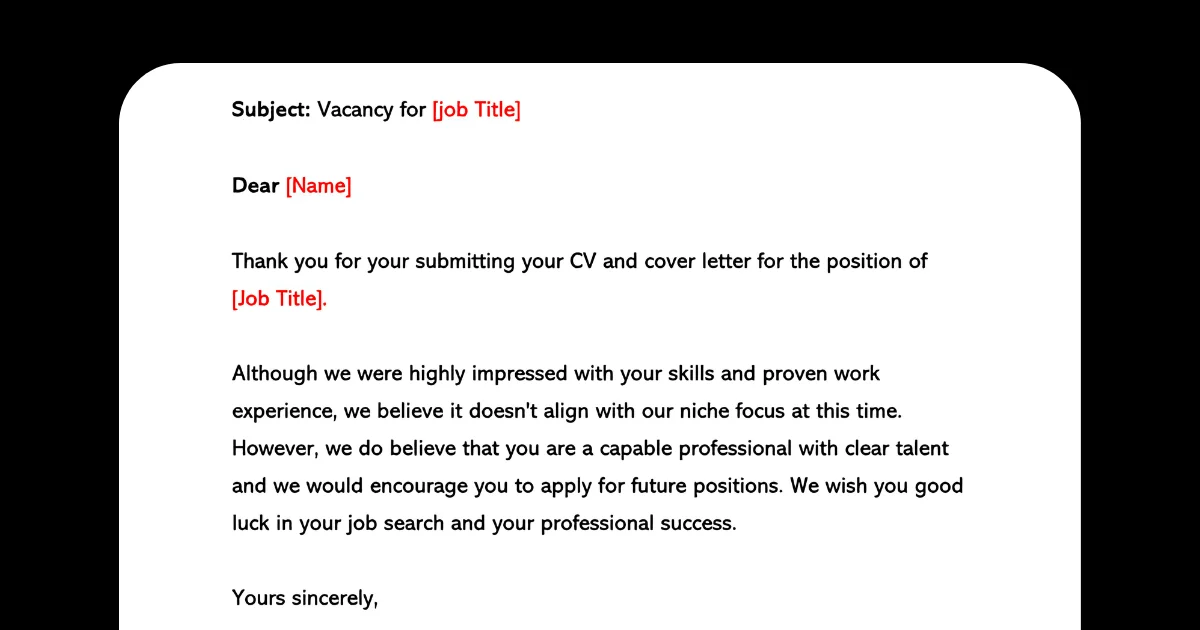
You may be qualified for some jobs and still hear nothing after applying for jobs. That silence can make you question your ability. Usually, it is not a verdict on your potential. It is a sign that the way you present your fit is not making the next step easy.
A hiring manager is rarely reading one application in peace. They are scanning fast, comparing quickly and trying to reduce risk. Your CV and application have a few seconds to answer three questions: Can this person do the work? Have they done something close to it before? Is there enough proof to invite them into a conversation?
If the answer is not obvious, the application gets passed over.
Your CV is making the reader work too hard
A recruiter should not need to hunt through three pages to understand what you do. The top half of your CV should say the role you want, the value you bring and the evidence that backs it up.
“Hardworking graduate” and “experienced professional” are not evidence. A clearer opening might show your field, relevant experience and one useful result. For example: “Digital marketer with two years of experience running social campaigns and improving website enquiries for service businesses.”
That does not guarantee an interview. It gives the reader a reason to keep going.
You are applying without a clear target
One general CV used for twenty different roles feels efficient. It rarely works.
A social media role, an operations role and a customer-success role may all value communication, organisation and problem-solving. But they use different words and look for different proof. When your application tries to be for everyone, it is hard for anyone to recognise themselves in it.
Choose a small group of roles you genuinely fit. Read ten job descriptions. Highlight the skills and responsibilities that appear again and again. Then make sure your CV uses truthful language that makes those matches easy to see.
Your best proof is missing or buried
Many people describe tasks instead of outcomes.
“Managed Instagram page” tells a reader what you were assigned.
“Planned and published weekly content that helped a small business increase enquiries” gives them a reason to trust you.
Not every achievement needs a big number. You can point to a campaign you coordinated, a process you improved, a client problem you solved, a presentation you delivered or a project you owned. If you are early in your career, academic work, volunteering, freelance work and personal projects can also demonstrate useful ability when presented honestly.
Put your strongest evidence near the relevant role. Do not hide it on the final page.
You are applying too late in the process
Some roles receive hundreds of applications quickly. Applying early will not replace a strong application, but it gives you a fairer chance of being seen before the shortlist becomes crowded.
Create alerts for the roles you want. Save a basic version of your CV, your portfolio link and a short note about your strongest projects. That way, you are not starting from zero when a good opening appears.
Your application does not make it easy to trust you
A CV, LinkedIn profile and portfolio should not tell three different stories.
Check your job titles, dates, contact details and key skills. Make sure your LinkedIn supports the same direction as your CV. If you have a portfolio, show the work behind the claim. A hiring manager should be able to move from “This person says they can do this” to “I can see how they think and what they have done.”
What to change this week
Start small. Pick one role you really want and rewrite your CV for that role only.
- Replace a vague summary with a specific role target.
- Put your most relevant skills and proof near the top.
- Turn at least three task descriptions into outcome-focused bullets.
- Remove information that does not help the employer make a decision.
- Ask one honest person what role they think you are applying for after reading the first half of your CV.
If they cannot tell, the CV needs more clarity.
The goal is not to look perfect
The goal is to make a credible next step easy.
You do not need to have done everything in the job description. You do need to show why your experience, projects and judgement make you worth speaking to.
That is the work before the interview.
If you are building a more focused job search, follow me on Instagram. I recently started yapping about how people can find the right opportunities and prepare properly for them.